Collision Physics Driving Lab stands out by prioritizing education over entertainment. The variety of vehicles and environments provides enough depth for meaningful experiments, while the simple controls keep the barrier to entry low. I particularly appreciated how the gravel map changed tire grip, forcing me to adjust my approach. The lack of scores or timers removes stress and encourages thoughtful exploration. It is an excellent tool for budding engineers or anyone curious about how cars interact with their surroundings.
Unlike conventional racing titles that reward the fastest lap, Collision Physics Driving Lab shifts attention to the forces at play during vehicle contact. The design encourages players to deliberately steer into objects and terrain features, then watch how the car responds. This approach turns each session into a mini science lesson about momentum, friction, and structural integrity. The game removes the pressure of competition, allowing users to focus purely on observation and learning.
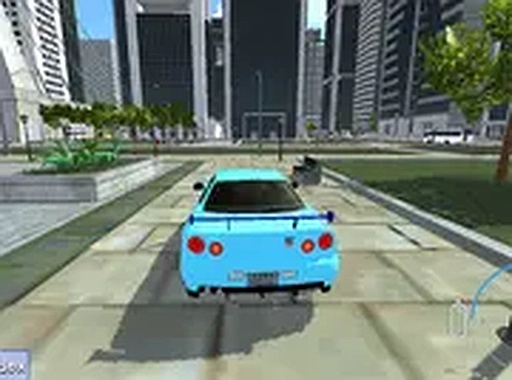
A small garage of cars is available, each with distinct mass and handling traits. Heavier vehicles tend to push obstacles aside with less disruption to their own path, while lighter cars may bounce or spin more dramatically upon impact. This variety lets players compare how different designs absorb or transfer energy during a collision. Switching between vehicles is straightforward and can be done between runs to test hypotheses.
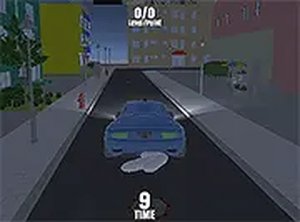
Several maps are included, each presenting unique surfaces and obstacles. A paved city lot offers predictable grip, while a gravel area introduces loose material that shifts under tires. Some maps feature barriers, ramps, or soft terrain that change how a car reacts on contact. These environmental variables add depth to the experimentation, as players must account for both the car's properties and the ground conditions.
Standard keyboard arrows or on-screen buttons manage steering, acceleration, and braking. The interface is minimal, keeping the focus on the action rather than complex menus. Full-screen mode is available for a more immersive view. No downloads or installations are required, and the game runs directly in any modern browser on desktop or mobile devices. This makes it easy to start a quick experiment anytime.
Collision Physics Driving Lab is designed for curious minds of all ages. It presents physics concepts through direct interaction without any violent or inappropriate content. Parents and educators can use it as a supplementary tool to discuss topics like Newton's laws, energy transfer, and vehicle safety. The non-competitive nature reduces frustration and encourages repeated testing and observation.
To get the most out of the simulation, try approaching each map with a specific question in mind. For example, how does speed affect the distance a car travels after hitting a barrier? Test the same scenario with different vehicles to isolate the variable of mass. Taking notes or screenshots can help track observations. The goal is not to win, but to understand the underlying physics.






Player Comments
Sign in to comment
You must be logged in before posting a review or rating.
No account? Create one
No comments yet. Be the first to comment!